The ultimate Modular Monolith blueprint
Transform the way you build modern systems. Learn the best practices for applying the Modular Monolith architecture in a real-world scenario. Join 2,800+ students accelerating their growth as software architects.
- 10 in-depth chapters
- 12+ hours of video
- Full source code
- Lifetime access


2,800+ engineers shipping better code
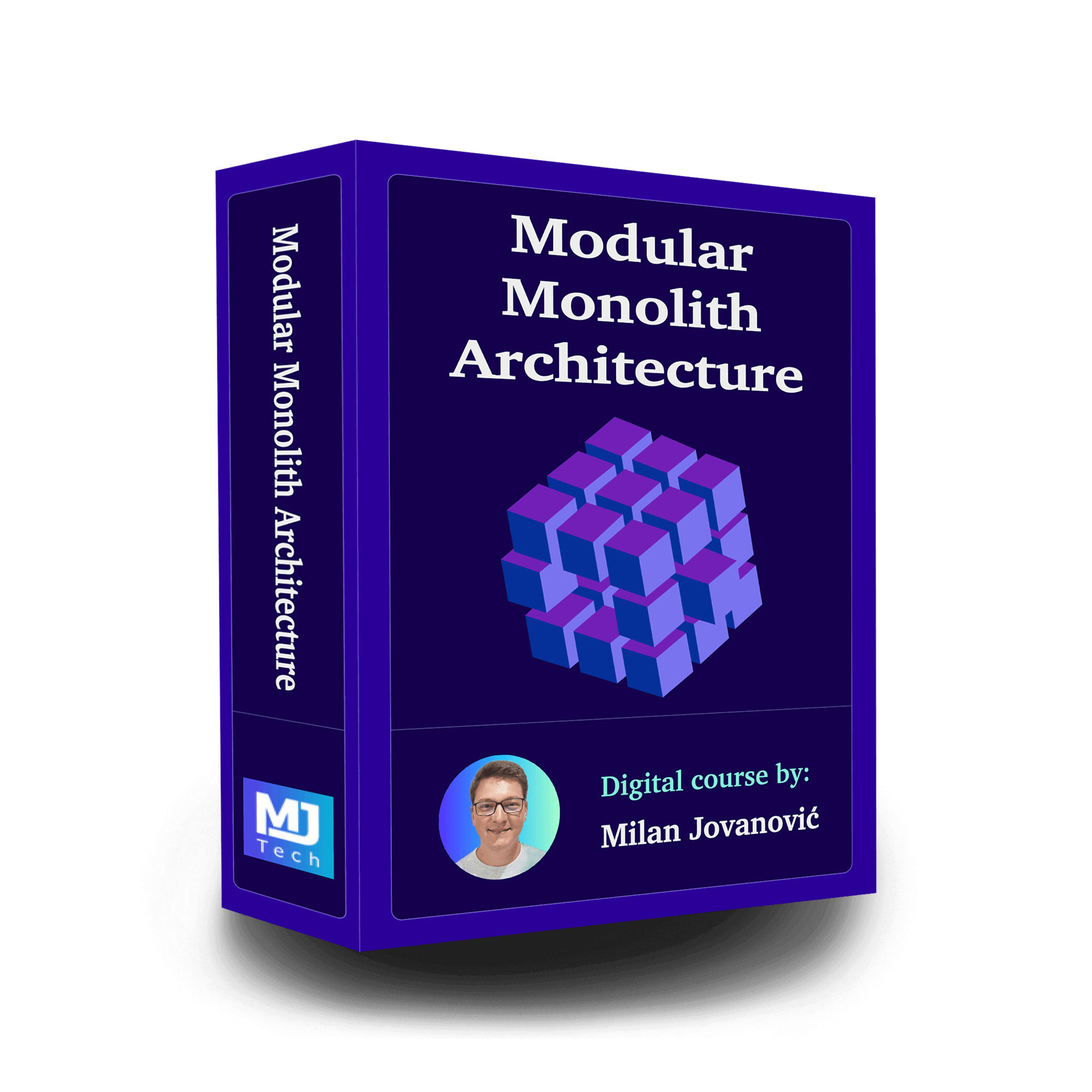
Is this course right for you?
Explore the curriculum- Who it is for
- ASP.NET Core developers who want to define module boundaries, enforce them, and connect modules through messaging.
- Before you start
- At least one year with ASP.NET Core. EF Core, Clean Architecture, and Docker knowledge will help.
- What you will build
- Evently, a modular application with authentication, RabbitMQ messaging, architecture tests, and a module extracted into a microservice.
- Choosing an edition
- Both editions include the project and CQRS With MongoDB bonus. Community adds Modularize Your Monolith, community access, and priority support.
Start building better modular systems today
One-time payment. Lifetime access, including every future update.
MMA
- 10 in-depth chapters
- 12+ hours of video training content
- Complete project source code
- Bonus: CQRS With MongoDBLearn how to introduce a document database to your modular monolith using CQRS with MongoDB.
- Lifetime access
- Email support
MMA + Community
- 10 in-depth chapters
- 14+ hours of video training content
- Complete project source code
- Bonus: CQRS With MongoDBLearn how to introduce a document database to your modular monolith using CQRS with MongoDB.
- Bonus: Modularize Your MonolithA complete bonus course that walks you through modularizing an existing monolith application step by step.
- Lifetime access
- Priority support
- Community accessJoin our exclusive community of developers. Get direct access to the instructor, participate in discussions, share experiences, and get help with your architecture challenges.
Not sure yet? Preview the free lessons before you buy.
Paying with company money? You'll get a receipt you can submit for reimbursement.
It's the second course I'm taking from Milan and I'm so excited about it. The way it's structured, the depth of each topic and the code is simply excellent. This course is worth every penny I spent on it!

The full curriculum
10 chapters plus bonus courses, all production-focused.
Introduction9m
- Agenda, Your Instructor, Course StructureFree preview
- How To Use This Course
01Modular Monoliths: Introduction46m
- Introduction, Monoliths and Microservices
- Modular Monoliths
- Module Constraints
02Defining Module Boundaries1h 47m
- Domain-Driven Design, Event Storming, Bounded ContextsFree preview
- Introducing Evently Sample ApplicationFree preview
- Building the First Module
- Refactoring to Clean Architecture
- Events Module Review
03Module Cross-Cutting Concerns1h 13m
- Cross-Cutting ConcernsFree preview
- Dependency Injection
- Module Configuration
- Structured Logging With Serilog and Seq
- Exception Handling
- Validation With FluentValidation
- Distributed Caching With Redis
- Health Checks
- Automatically Registering Endpoints
04Module Communication1h 22m
- Module Communication PatternsFree preview
- Publishing Domain Events
- Introducing the Users Module
- Scaffolding the Ticketing Module
- Synchronous Communication
- Duplicating Data Between Modules
- Asynchronous Communication
- Eventual Consistency: Introduction
05Authentication & Authorization1h 23m
- Authentication & Authorization
- Keycloak Identity Provider Setup
- Token Based Authentication
- User Registration With Keycloak
- RBAC Authorization
06Architecture Enforcement35m
- Architecture Enforcement
- Modular Architecture
- Architecture Testing
07Reliable Messaging: Outbox and Inbox1h 10m
- Reliable Messaging
- Outbox Pattern
- Outbox: Idempotent Consumers
- Inbox Pattern
08Event-Driven Architecture1h
- Event-Driven ArchitectureFree preview
- Event Notifications
- Event-Carried State Transfer
- Materialized Views and CQRS
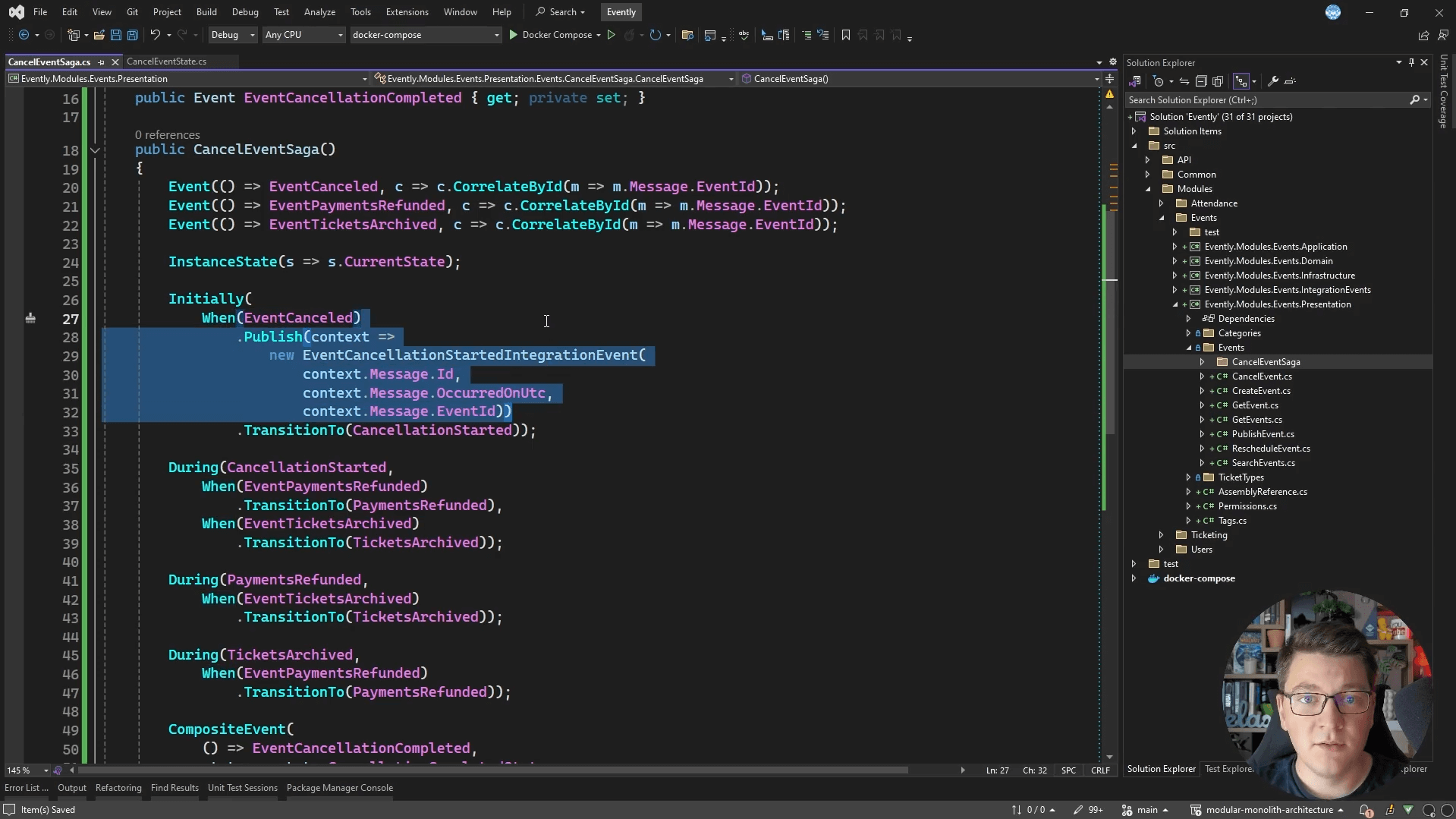
- Saga Pattern, Orchestration
09Testing Modular Monoliths1h 14m
- Testing Modular Monoliths
- Unit Testing
- Integration Testing
- System Integration Testing
- Automated Testing in CI/CD Pipelines
10Microservices: Extracting Modules1h 24m
- Microservices Benefits, Extracting ModulesFree preview
- Distributed Tracing, OpenTelemetry
- Distributed Messaging With RabbitMQ
- API Gateways, Introducing YARP
- Extracting Modules to Microservices
BONUS — CQRS With MongoDB40m
- Introduction, Document Databases
- Implementing CQRS With MongoDB
BONUS — Modularize Your Monolith: A Quick GuideCommunity1h 31m
- Introduction, Modular Monoliths
- Defining Module Boundaries
- Introducing Sample Application
- Module Code Organization
- Module Communication
- Module Data Isolation
- Enforcing Module Boundaries
2,800+ engineers shipping better code
Explore the project, chapter previews, and bonuses
“You shouldn't start a new project with microservices, even if you're sure your application will be big enough to make it worthwhile.”
What's inside
Everything you need to build and scale a modular monolith
.NET 10
Latest features for modular systems
PostgreSQL
Reliable, scalable persistence
RabbitMQ
Distributed messaging between modules
Docker
Containerized dev environment
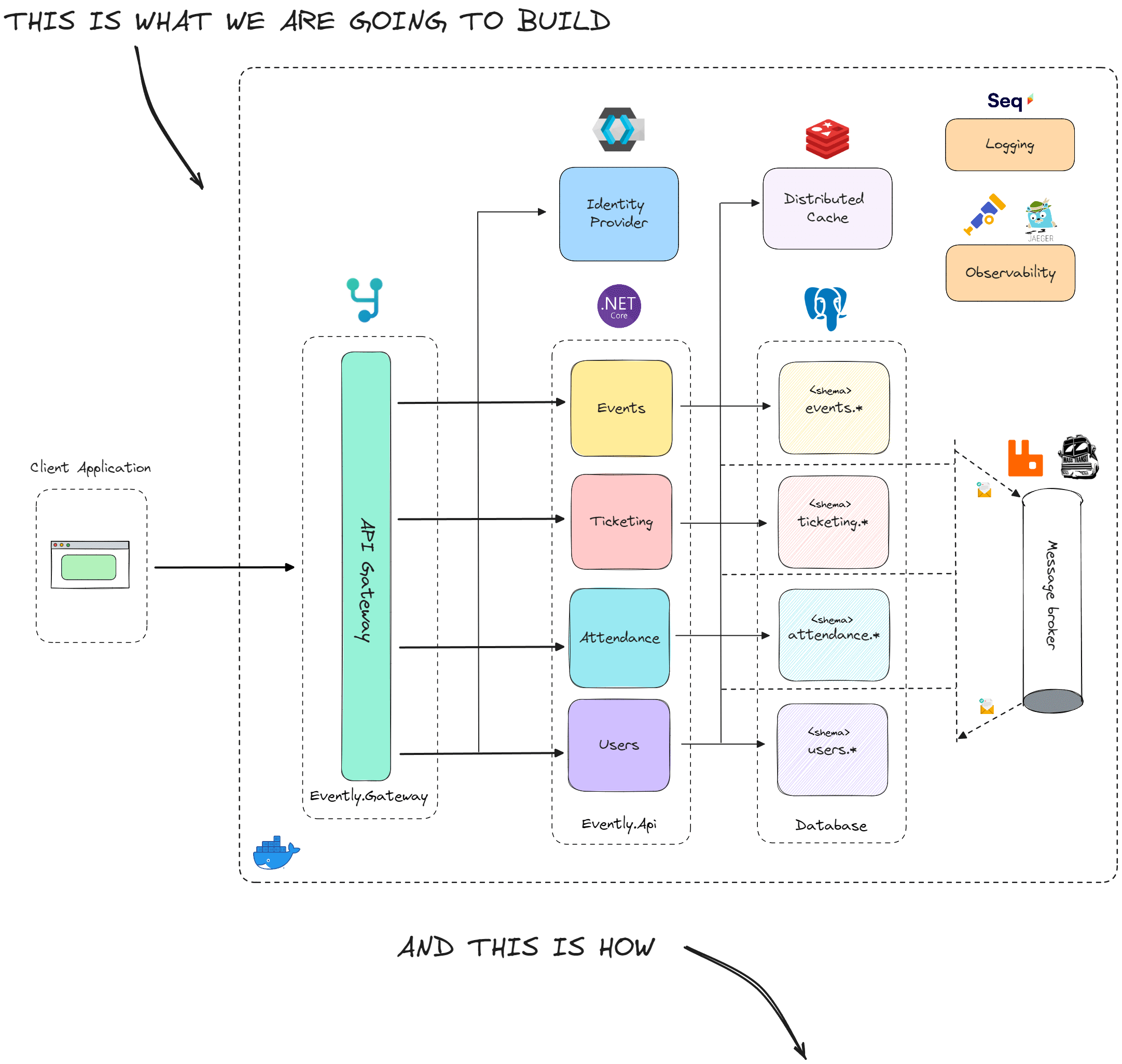
Modular Monoliths: Introduction
Start with the foundations. Building a modular monolith requires a deep understanding of monoliths and microservices — modular monoliths take the best of both worlds.

Defining Module Boundaries
Apply Domain-Driven Design and Event Storming to explore potential domain boundaries. This is where we introduce the Evently sample application we will build.
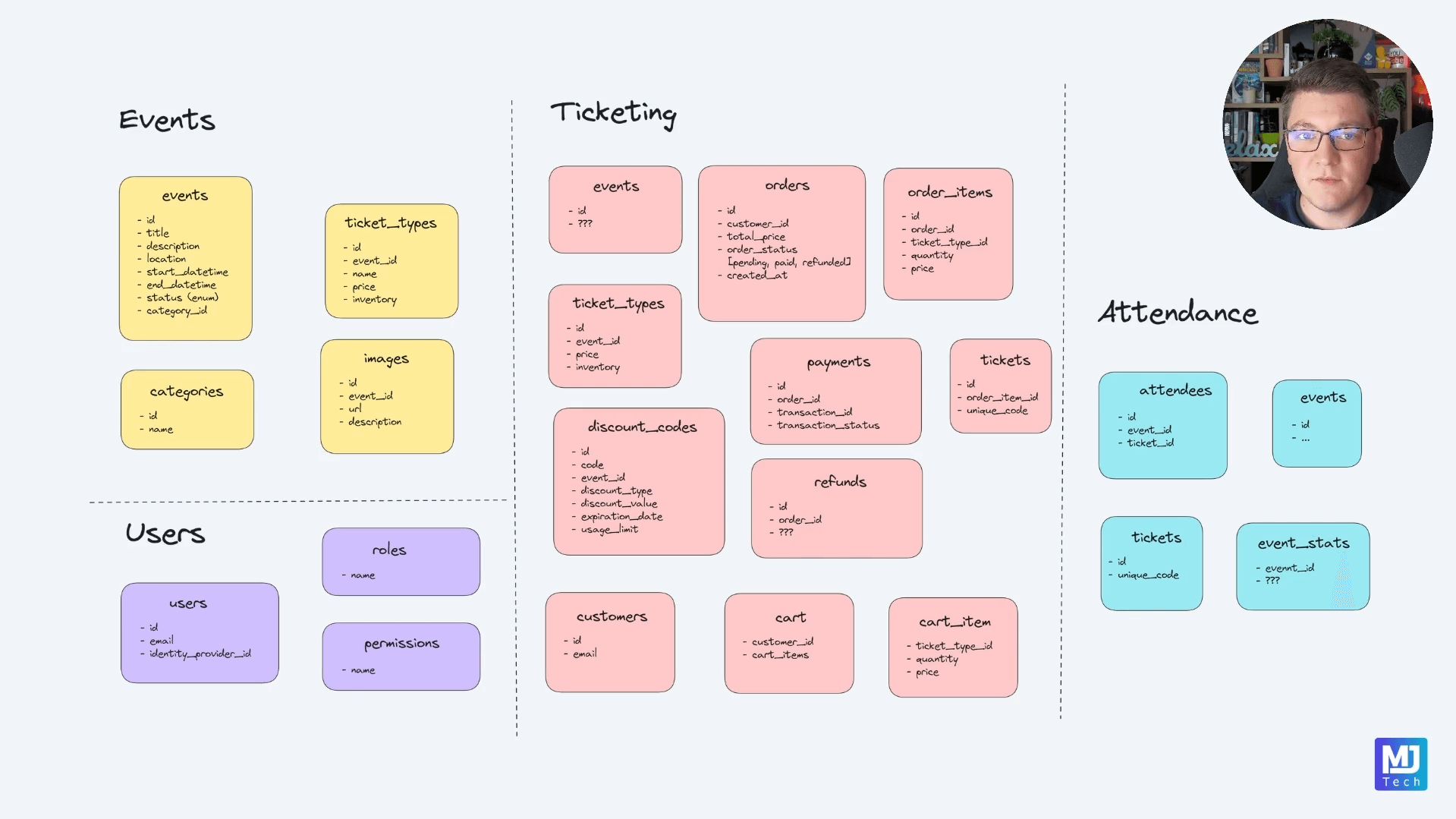
Module Cross-Cutting Concerns
How do you apply cross-cutting concerns without coupling modules? Learn to isolate dependency injection, configuration, logging, caching, and more for each module.
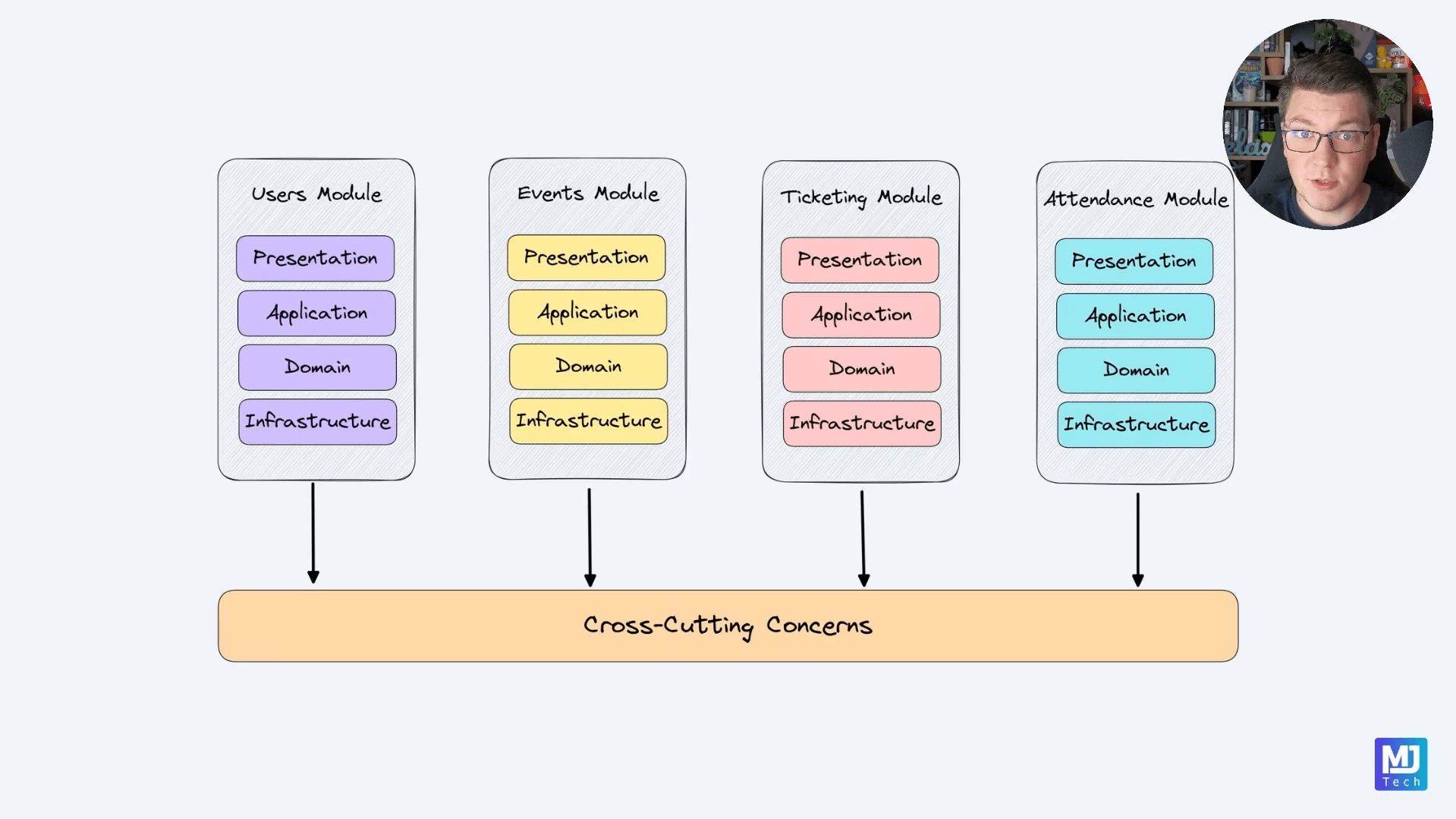
Module Communication
Explore the two ways modules can communicate. This decision determines how flexible your system will be for future changes.
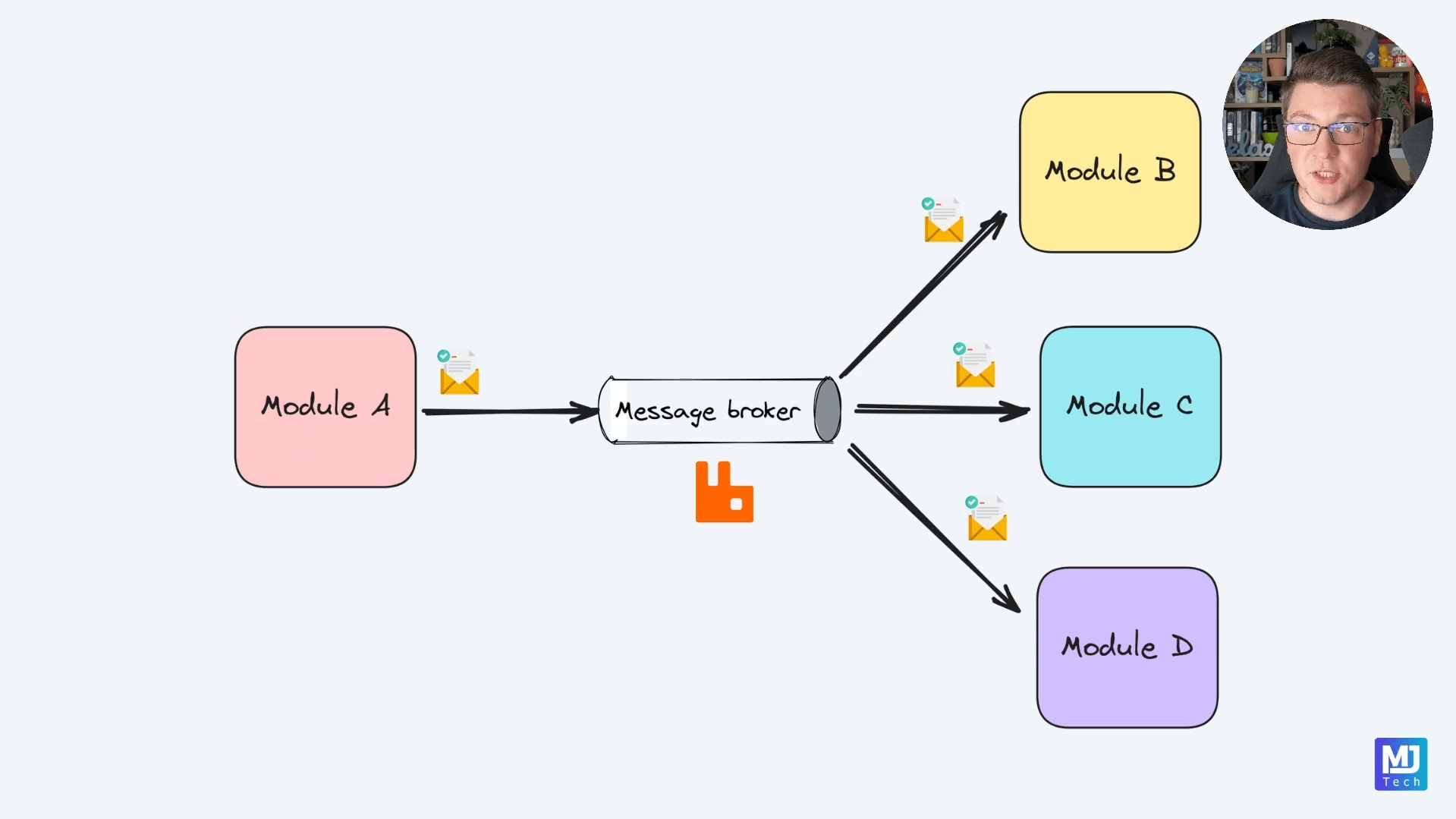
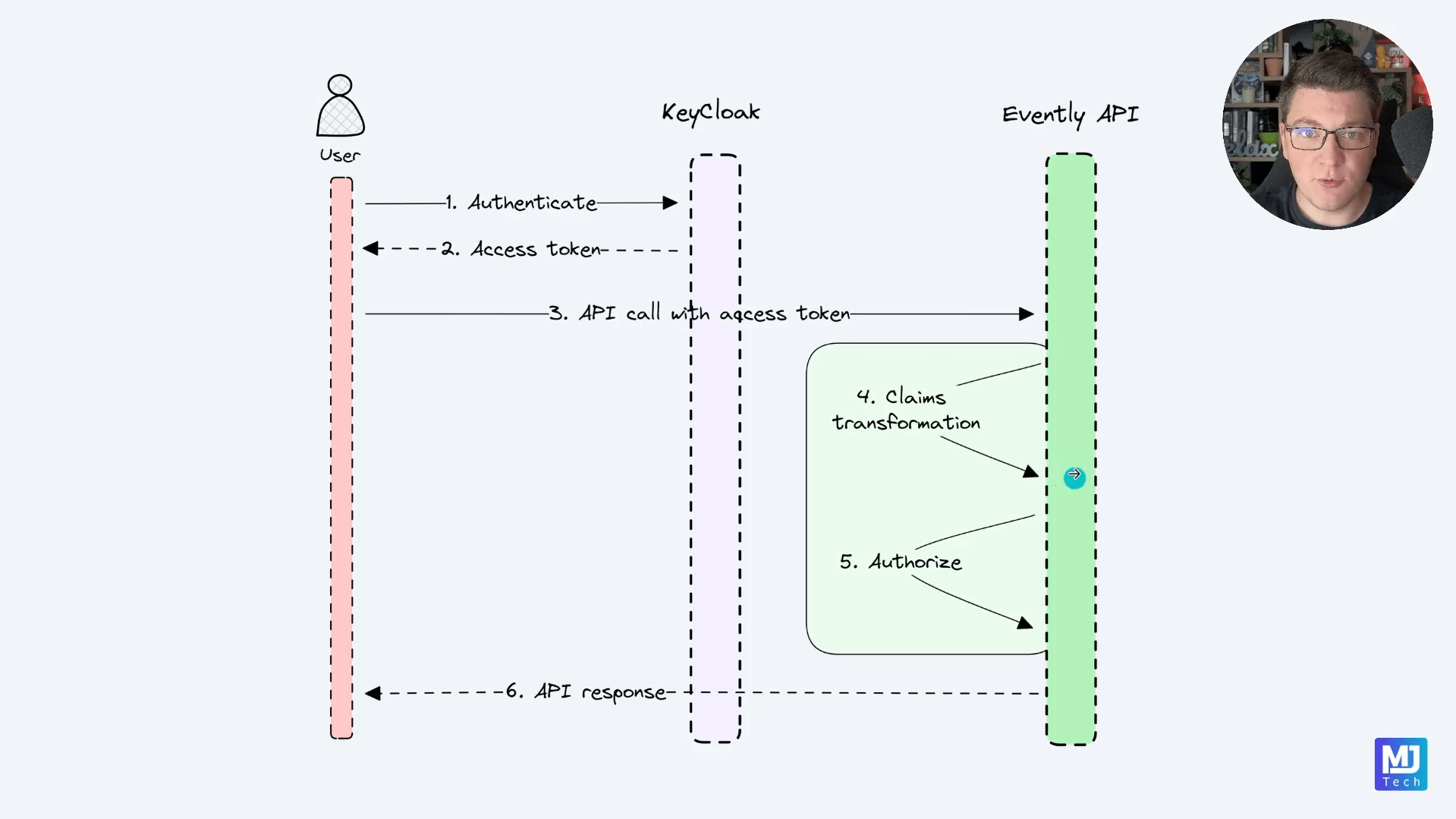
Authentication & Authorization
No production system is complete without robust auth. We introduce token-based authentication and RBAC (Role-Based Access Control).
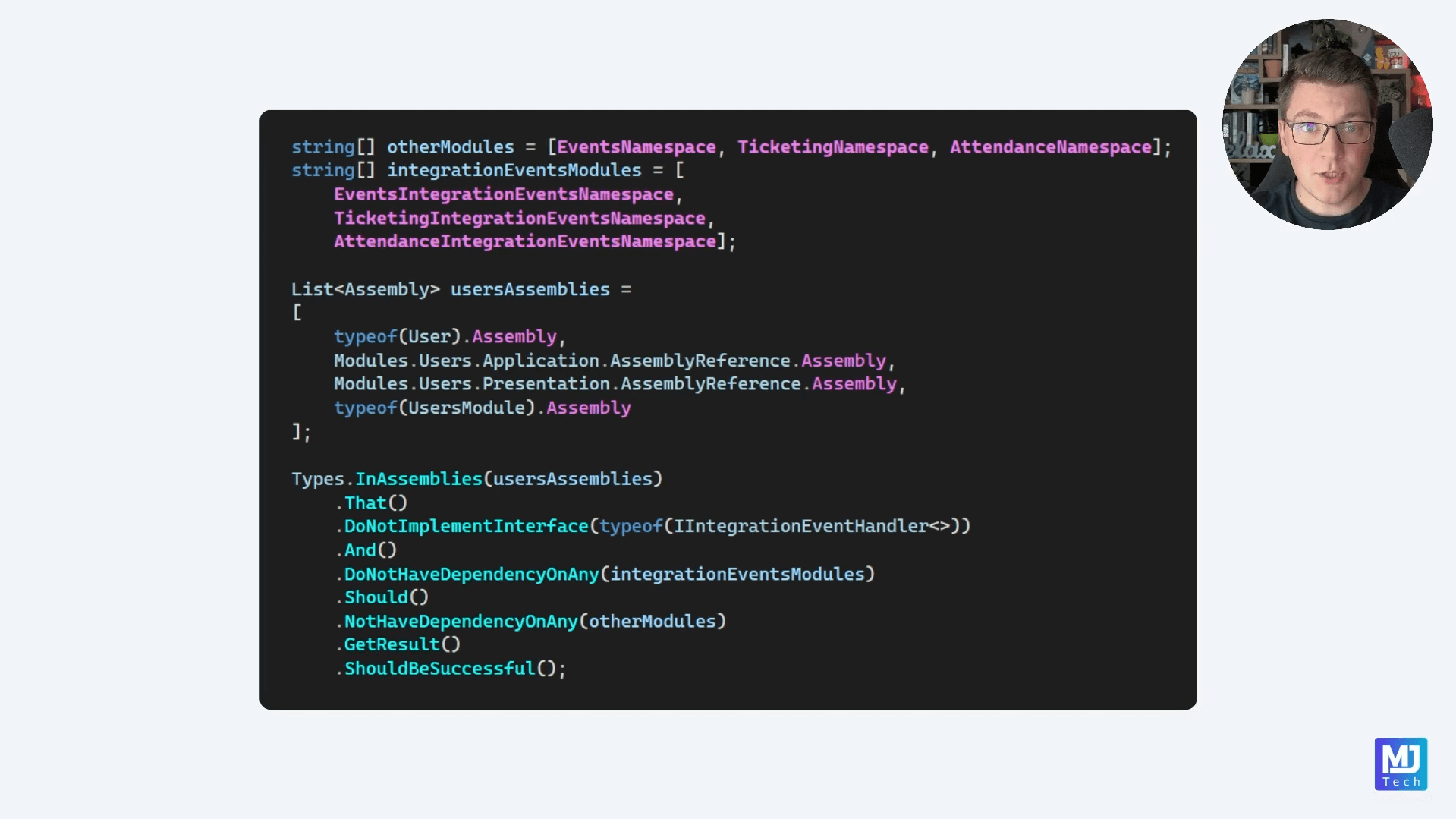
Architecture Enforcement
What good is a shiny architecture if you can easily break it? Learn 3 techniques to ensure your team sticks to the modular monolith architecture.
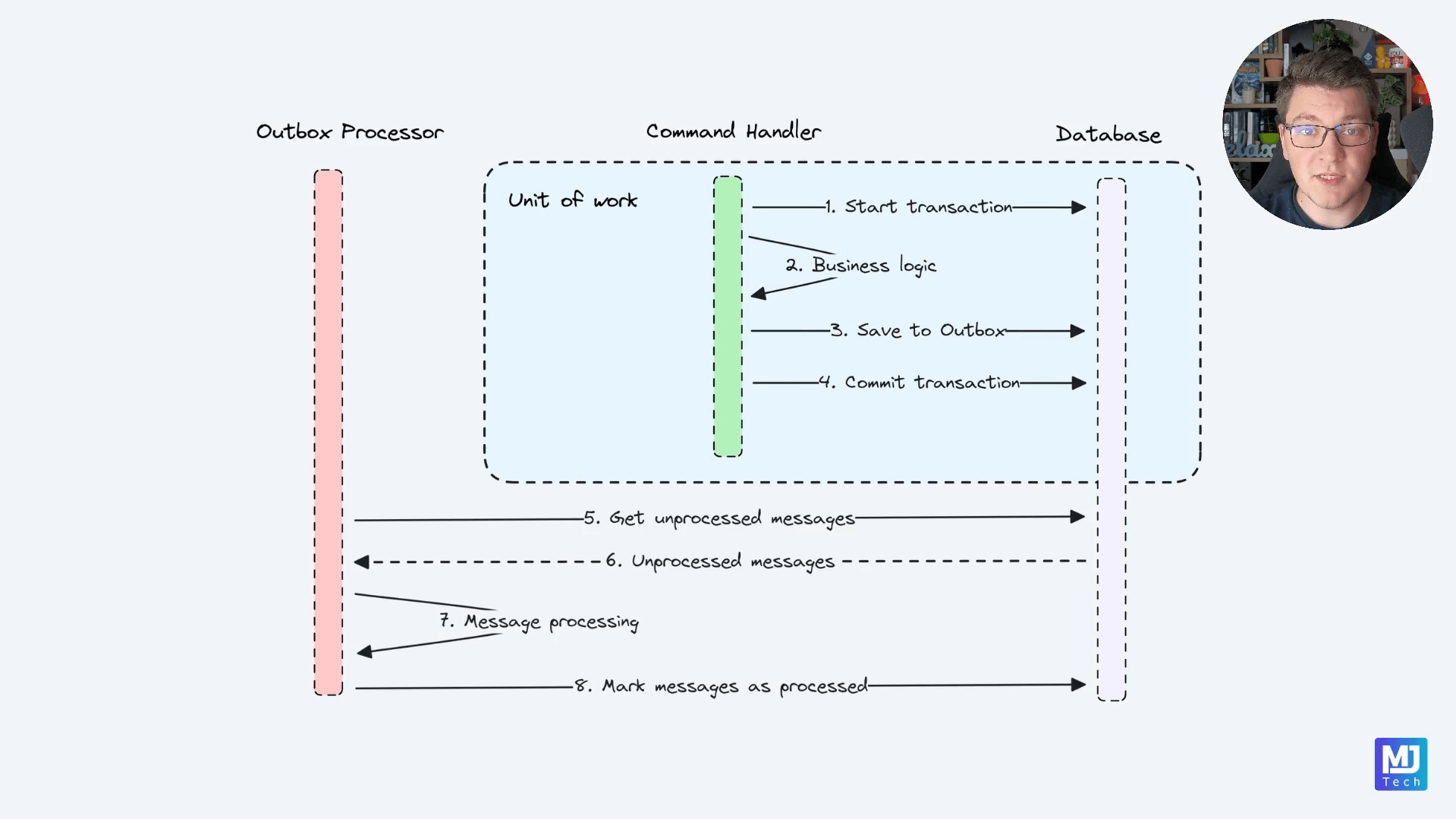
Reliable Messaging: Outbox and Inbox
What happens if you fail to publish a message? How do you apply temporal decoupling and implement idempotency? You will learn all of this and much more.
Event-Driven Architecture
What does it mean to be event-driven? Learn how the reactive programming paradigm helps you implement a robust, loosely coupled system.
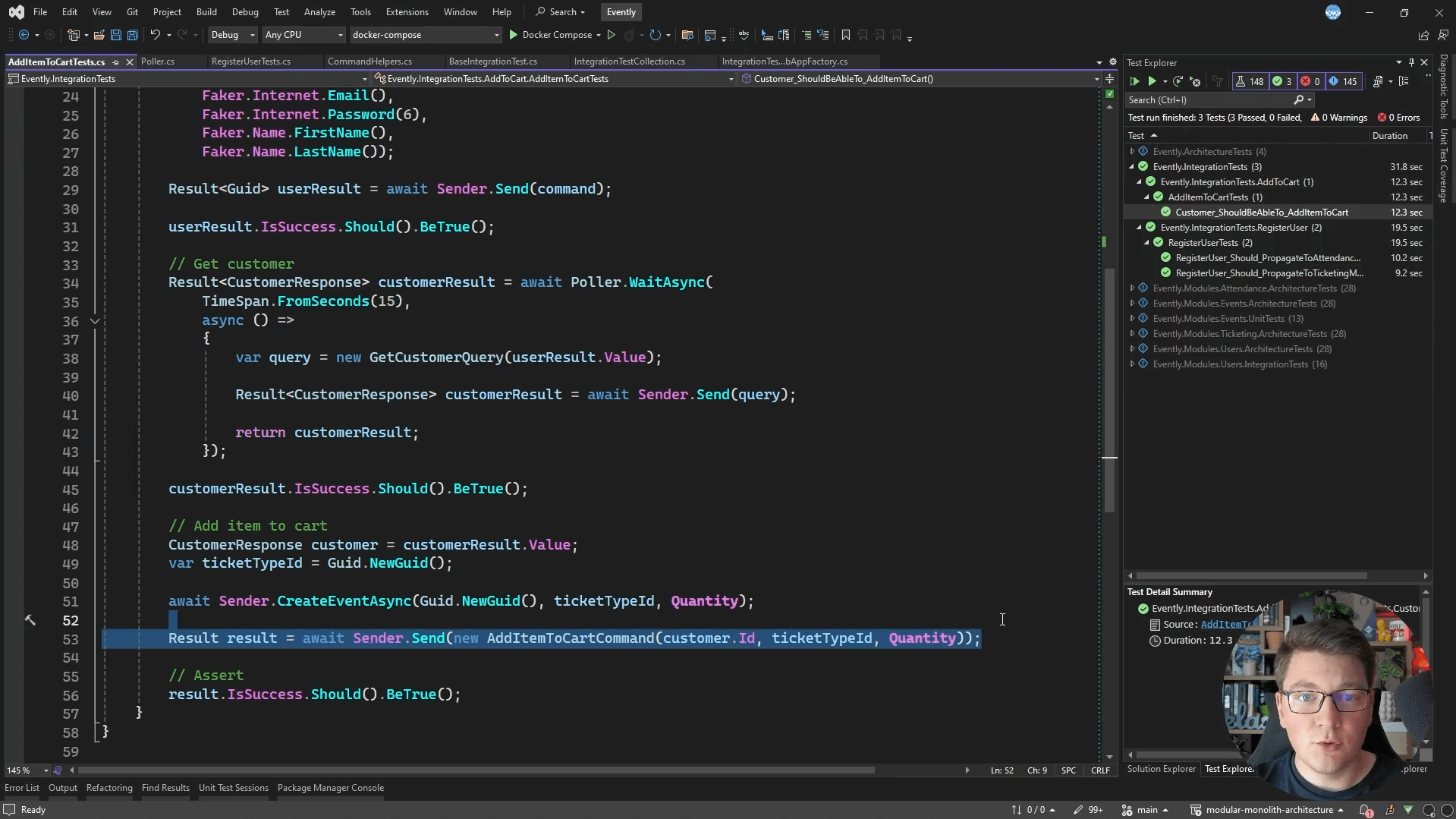
Testing Modular Monoliths
How can you have complete confidence in your system? A powerful approach for testing modular monoliths that is almost like running it in the real world.
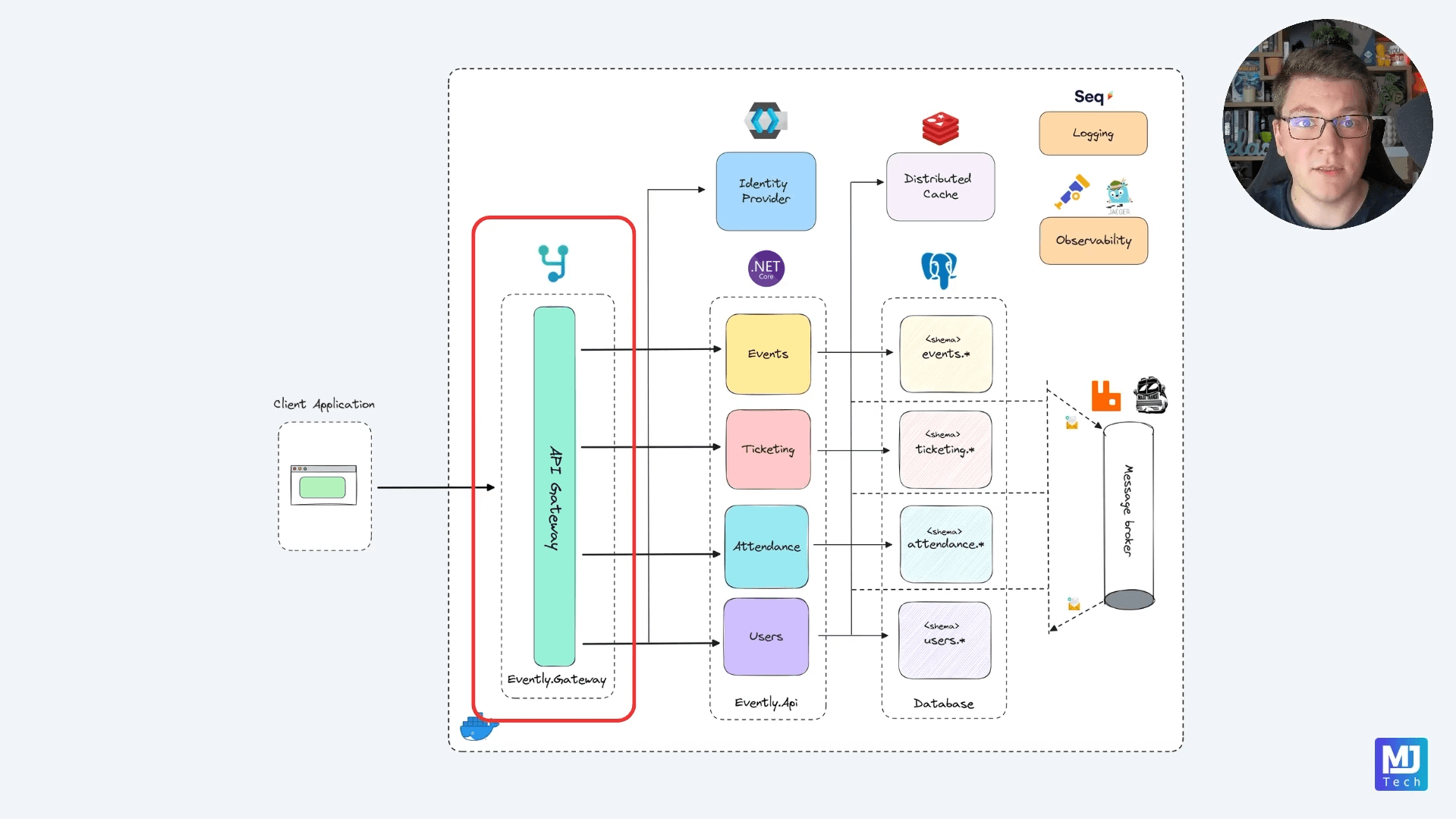
Microservices: Extracting Modules
Finally, transition from a modular monolith to microservices. We also introduce an API Gateway and a distributed messaging system.
More than just theory
We build a production-ready system from scratch — dozens of API endpoints, 50+ use cases, and 6000+ lines of code. Plus bonus courses to make sure you apply what you learn.

Modular Monoliths: CQRS With MongoDB
Wondering how to introduce a document database to a modular monolith? This bonus course contains the answers.
 Community
Modularize Your Monolith: A Quick Guide
A complete bonus course that walks you through modularizing an existing monolith application, step by step.
After completing this course you will
- Confidently use modular monoliths to build robust, scalable systems
- Create an architecture that stands the test of time
- Understand how to implement an event-driven system
- Easily migrate to microservices (if you ever need to)
Loved by developers
What students are saying about MMA
53 student reviews
I'm only halfway through the Modular Monolith Architecture course, but the value it provides is already exceptional. Milan explains complex architectural patterns with clarity and practical examples that can be applied immediately to production systems. Highly recommended for developers looking to build scalable and maintainable backend architectures.
 Selçuk BilgenFreelance Fullstack Developer
This course is awesome. I learned a lot of new things. Thank you so much Milan
 Emir TARTAR
This course is perfect for anyone who has worked with both monoliths and microservices and wants to take the best from both worlds. I just finished Milan Jovanović’s Modular Monolith course, and it delivers exactly that — a clear, practical path to building modular systems that combine simplicity with scalability. Milan explains complex architectural concepts in a very approachable, hands-on way — from defining module boundaries and handling cross-cutting concerns to enforcing architecture and testing effectively. The section on reliable messaging, especially the Inbox and Outbox patterns, was my favorite — it really showed how to build resilient, event-driven systems without jumping straight into microservices. Highly recommended for engineers and architects who want to design clean, maintainable, and future-proof systems.
 Ratko Petrovic
Read 50 more student reviews
So much value on this course! No only Modular Monolith Architecture but so much more interesting topics. Highly recommended.
 Bruno Ferreira
For me as a beginning software developer on ASP.NET Core and C# it is a very welcome course. The most important learning for me is that it bridges the gap between the theory in books about software architectural related principles and the practical implementation of those principles. It provides a very complete and well explained guide on how to apply these principles in a real world project.
 Youri Torchalski
This is an excellent course on building a modular monolith in .Net, the course progression is really well thought out, with a clear presentation of benefits and tradeoffs of the different options you have at certain stages. And the material is top quality. It also serves as a great compilation of various modern architectural patterns that are useful for a lot of situations, not only specifically for modular monoliths.
 Thierry Krebs
Learning modular monolith architecture will really sharpen my architectural skills and help us with our legacy migration plans. The Milan MMA course is packed with great content and hands-on examples that can guide us in building better, more maintainable software.
 Edwin Deloso
Before this course, my biggest challenge was managing a complex, monolithic application that was becoming increasingly difficult to maintain and scale. I was constantly battling with tight coupling and a lack of clear boundaries, which made adding new features a slow and error-prone process. The Modular Monolith Architecture course by Milan Jovanovic was a game-changer. It provided me with a clear, practical framework to solve these challenges. The information I gained will help me and my team to refactor our codebase, creating well-defined modules that are easier to understand, test, and evolve. The best thing about this course is its focus on real-world application. Milan's explanations are incredibly clear, and the examples are highly practical. I walked away with not just a theoretical understanding, but a solid plan to immediately improve our architecture. I highly recommend this course to any developer looking to build more maintainable and scalable applications.
 Ellworth Acquaye
I watched a lot of courses. Milan explains in a very simple, understandable way. I really like that in addition to the theory, he shows the code in practice. In addition to a detailed explanation of the concept of microservices and monolithic applications, I finally understood how to implement Keycloak in the application.
Krunoslav KanjuhDefinitely one of the best courses I’ve ever watched. It gave me so many solutions to problems I face every day while working on an old .NET legacy project with no architecture to speak of. Watching this course helped me gain a deeper understanding of C#, .NET, and software architecture in general. While I’m not able to fully apply everything in the projects I work on due to legacy requirements, the course has helped me solve dozens of issues I previously couldn’t resolve. It also highlighted some problems I didn’t even know existed! 😊 I would strongly recommend this course to anyone interested in software architecture and looking to improve their understanding of .NET.
 Viktor Antunovic
The best software architecture course in .NET you can see. Milan has extensive knowledge of systems architecture accompanied by great communication skills. His way of explaining makes it very easy to understand each topic he addresses in this course.
 Javier Fernández Machín
I'm about 40% into this course and its really excellent so far. I am learning so much practical and extremely useful information (and, of course, code) that will be applied to production applications I am currently developing. Milan's course covers all aspects of Modular Monolith application development in a very clear, step by step way. I would highly recommend it to any .net core developer. Even if you're not planing to use the Modular Monolith approach, there is so much to learn and reuse in your projects.
 Ian Corcoran
I follow Milan for his YouTube videos and his way of explaining things, which instantly captivated me. So, as soon as I saw the opportunity to take one of his courses, I didn't hesitate. I know this course will greatly help me improve my career as a software engineer. It covers all the main topics I want to learn to develop my own project and apply them to my daily work as a developer, improving my skills and allowing me to create more professional products. The best thing about MMA architecture is that, when applied, we can create robust and scalable applications, without tight coupling and with simple implementation. Thank you, Milan, for this excellent course.
 Dariel Amores Fernández
Before taking the Modular Monolith Architecture (MMA) course, one of my biggest challenges was working with desktop applications built in .NET that relied directly on Entity Framework Core, without a clear or scalable architecture. This made maintaining and evolving the applications quite difficult. Thanks to the course content, I’m now gradually migrating these systems to a much more robust, modular, and maintainable architecture. MMA is helping me unify design principles, properly structure my modules, and apply best practices that truly make a difference in the long run. What I value most about the course is how clearly complex concepts are explained and how they translate into practical solutions. It’s thoughtfully designed to address real-world development challenges. Without a doubt, it’s been a great investment.
 Jose Luis Castaneda Rodriguez
I'm developing a relatively large project from scratch, and this architecture lets me break the project down into logical bricks without the constraint of microservices. I also intend to migrate a microservice project to this architecture. What I like about this architecture is that you get the advantages of microservice without the disadvantages, and for most projects that's more than enough.
 DOMINIQUE EGA
I've never written a decoupled application that communicates via event messaging before. This course has turned out to be perfect! My favorite thing about this architecture is you can prepare your app for the future without excessive premature optimization. I will likely purchase more of Milan's courses.
 Joe Washek
I am the CTO of a SaaS Solution (ERP), and we are being challenged to integrate our legacy solutions with a lot of other partners' solutions. This course gives me the tools to implement ways to get it done.
 Alexandre Luis Mancini
This is a very detailed, comprehensive and highly relevant course for anyone in the .NET space working on business applications today. It covers theory with best practice implementations in .NET and related technologies with a very well-conceived case study that exposes numerous common software challenges. Modular Monolith Architecture is a sweet spot on a spectrum with ball-of-mud monolith at one end and many microservices at the other. At the heart of this approach are well defined modules and channels of communication between them. These structural elements define correct dependencies and promote loose coupling which ultimately provides software more capable of enhancement as business demands change. I thoroughly recommend taking this course to enhance your skills and technical proficiency.
Stephen HandleyI completed both PCA and MMA courses. I really enjoyed the content and the structure of these courses! It covers 100% back-end construction (design, coding and testing). I recommend these courses to anyone willing to learn how to create state-of-the-art applications with .NET!
 Rudy Cortembert
In my work as a fresh Junior C# dev, it helped in many points regarding structuring services into separated modules and how to handle the communication in a module itself. For me personally I can listen very well to his voice and his explanation style, so to speak.
 Florian Draxler
Exceptional value. The course bridges theory and practice by tackling real-world problems. I appreciate the in-depth explanation. I love Milan's straight-to-the-point flow. He provides a clear progression from basic concepts to production-ready solutions. At its price point, it's an outstanding investment for developers looking to build maintainable, scalable systems.
 Tomasz Rutkowski
The modular monolith approach, as brilliantly explained by Milan, helps you build better software by promoting clear separation of concerns, making it easier to manage complexity, maintain code quality, and scale effectively. The best part is its balance of simplicity and flexibility, enabling teams to create well-structured, maintainable applications without the immediate overhead of microservices.
 Charlie Krambeer
Up until now the course is amazing. Understanding how the modules boundaries should be defined, even if I've never had a professional experience with such architecture it's awesome to understand how this would be translated to microservices
 Joao Delgado
Great explanation of the concepts! I really like the structure of this course. Additionally, I’ve learned about more tools that I can use in my daily work, such as Seq for log monitoring and Keycloak as an Identity Provider. With Keycloak, you don’t need to implement an Identity Provider yourself.
 Anatoly Sorokin
I just completed Milan Jovanovic’s Modular Monolith Course, and I really enjoyed the course and learned a lot. I’m very happy I took this course. I learned several new things, learned about what a modular monolith is, rules to adhere to, great patterns to re-use code between modules, communication, boundaries, event-driven architectures, and ways to break up and organize your Visual Studio solution. This course was well worth the time. I strongly recommend this to senior software engineers & architects that are new to modular monoliths, event-driven architecture, and clean architecture concepts. Thanks for this course, my skills and knowledge improved from taking this course.
 Blake T
MMA course really help me to generate better, readable and testible code.. also with the technic that milan teach for each and every concept of MMA. the only thing i found it hard to grasp is about RBAC which makes more complicated code. but i just repeat the video for sometime and finally get it. THANKS MILAN !
 Neil Bryan Abarabar
I've found immense value in this course on Modular Monolith Architecture. The clear explanations and practical guidance on module communication have been eye-opening. Understanding how to properly structure and connect modules has transformed my approach to building maintainable systems. Milan, thanks for this great job!!
 Miguel Poveda
Before this course, I struggled with defining clear module boundaries in my projects. The Modular Monolith Architecture (MMA) course solved this challenge completely, providing practical guidance on both boundary definition and asynchronous module communication. The course's focus on testing and module interaction was particularly valuable. Highly recommended for developers looking to master modular system design!
 Hung Chu
Well put together and provides great insights for building your own apps. It touches on everything you need and gives you a comprehensive foundation, along with Milan's Pragmatic Clean Architecture course, it's a great set of building blocks to work from. MMA provides a simpler approach that still provisions for evolving into micro services if the complexity becomes necessary. Keep up the great content Milan.
 Jay Giles
Milan is such a great instructor. I've been to a lot of online courses and none come close to this. The course will give you detailed and practical knowledge that you can apply to your actual work. No more hello world course. You'll be able to produce production ready products after learning from Milan!
 John Kenneth Arrojo
This was by far the best course i have ever seen in software engineering. It is relevant for both beginners and seasoned veterans alike. I would highly recommend everyone to attend the course.
 Nikola Cigula
It's the second course I'm taking from Milan and I'm so excited about it. The way it's structured, the depth of each topic and the code is simply excellent. I have so many thoughts on how I will reuse this knowledge in my day-to-day work. This course is worth every penny I spent on it! Thank you, Milan!
 Mykola Kriukov
The course is simply amazing, it has the facility to explain a complex subject in a simple and strongly technical C# oriented way. Milan approached the topics with an enormous ease, which allows you to absorb the knowledge very quickly. Therefore, I recommend it 100%.
 Fernando Ventura
As a senior software engineer, I found the "Modular Monolith Architecture" course by Milan to be transformative. It provides a perfect blend of theory and hands-on practice, guiding you through the complexities of building scalable and maintainable systems. The deep dives into module communication, and transitioning to microservices, were particularly valuable. The course’s structured approach and real-world examples made complex concepts easy to grasp and apply. This is a must-have resource for anyone serious about mastering software architecture.
 Seyedarman Fatemi
Milan's course on Modular Monolith Architecture was transformative. The practical insights and hands-on exercises really helped me grasp the balance between modularity and simplicity. Now, I feel confident in designing scalable, maintainable, and high-performing software systems. Even though I keep up with new technology daily, this course is a must-have. Whether you're a senior developer or just starting with MMA in .NET, it's a game-changer for anyone aiming to build robust applications.
 Admir Mujkic
As a C# developer with more than 20 years of experience, I can say without doubts that Milan's course on Modular Monolith Architecture is a must-have for both experienced and new developers. The course was incredibly well-structured, providing a comprehensive overview of the Modular Monolith approach and I am excited to apply these strategies to create scalable, maintainable, and efficient applications.
 Marco A T Ribeiro
Using Modular Monolith Architecture (MMA) helps me build better software by improving maintainability, scalability, development speed, deployment simplicity, and overall system consistency. The best thing about MMA is its balance between simplicity and modularity. It offers the ease of managing a single app with the benefits of a modular setup. Plus, it makes transitioning to microservices later a breeze if needed. It's perfect for growing teams and projects, providing flexibility, maintainability, and scalability.
 Saeed Adam
It was an extraordinary course. The way Milan introduces new concepts organically is simply remarkable. It helped me a lot in offering my clients more robust architectures with better practices, as well as enabling my team to internalize essential architectural concepts in modern back-end development.
 Yarlen Vásquez
As a SE who has been less hands on and more leadership lately this was an awesome course for getting back up to speed on both the dot net platform (which is now also awesome) as well as the latest patterns, practices, coding techniques in addition to the modular monolith concept in a practical format. This is the most real world course I have ever done. No Hello World, or ToDo list here, this is a serious full scale production application that you could take to market. I can't imagine how much time and effort went into creating this but it was worth it. To that point though, if you do this course you need to put in some serious time but as I said this is a serious course for those who are prepared to commit. TBH, I was not initially sure about the cost but now I am done I realise it would have taken dozens of other courses and lots of googling to get this real world knowledge. On Modular monoliths themselves, as someone who introduced microservices into a previous tangled monomess, I learnt some of the pitfalls so this midpoint idea makes perfect sense and you are not loosing anything as you can always split them. Thank you, Milan.
 Vaun Drex
If you are a freelancer like me, or a software engineer at a tech company and you want to confidently recommend the Modular Monolith Architecture to your clients, get this course. It’s worth every penny.
 Stefan Oproiu
I am immensely grateful for the opportunity to take this course. The level of expertise and depth of knowledge shared was truly exceptional. The course covered concepts and topics that I had been seeking to understand for a long time. Thanks to this course, all my doubts have been cleared, and I feel much more confident in my abilities. Thank you for imparting such valuable knowledge!
 Junior Felix Gervacio Burgos
The course provides comprehensive and exceptional coverage of the subject. The dedication and effort invested in its creation are commendable. It adopts a forward-thinking approach, relevant to a wide range of software systems, demonstrating a progressive step in the introduction of new methodologies and techniques. This course is a testament to how educational content should be curated for its audience. Thnak you, Liviu Birjega
 Liviu Birjega
This course is awesome. Milan explanations hit the right balance between flying over topics we all should know and diving deep into more intricate details. The information and the pace in which is delivered and structured chapter by chapter is on point. Highly recommended!
 Nery Brugnoni
I have been doing software for 30 years. This is one of the best courses that I have ever seen and the end result is phenomenal.
 Joe Crowley
This is truly a master-piece course. Milan explained everything in details what you need to know to build a successful and well-designed Modular Monolith Application. I really enjoyed watching 12h+ of content. The quality of this course is on a top level. For sure this is the best Modular Monolith course you can find. The quality of this course is confirmed in the "10 - Microservices: Extracting Modules" chapter where a dedicated Module of the Monolith system is extracted into a seperate microservice in just one hour. I also like that this course is charged with so valuable information such as: writing tests, using OTEL, Jaeger and YARP. I definetely recommend this course for everyone who wants to learn how to build Modular Monolith applications, how to monitor the system, get the guidelines how to build a high quality software with a great design and testability. I can confirm that this course will be valuable for any level of developers, including seniors and lead devs.
 Anton Martyniuk
Milan Jovanovic's MMA is an awe-inspiring course, the best I have taken. The MMA course offers a comprehensive framework that deeply covers different advanced topics, enabling developers to create robust and scalable software solutions with best practices and a set of cross-cutting, cross-module communication, and authentication + authorization tools that completely enhance the development experience. I strongly recommend the course to anyone who wants to build quality software. PS: The course lessons are straightforward to follow for non-native English speakers.
 Gerardo Garnica
Milan's modular monolith architecture course taught me invaluable lessons, enriching my understanding and paving the way for me to build better systems.
 Kevin Kraemer
So far, every module has a really nice topic to discuss. The best one is module communication patterns. I enjoyed the async communication approach with MassTransit. Great work, Milan!
 Emanuel Rodriguez
This masterpiece course is packed with valuable information, providing everything you need to know to build a successful Modular Monolith application. The instructor's expertise and detailed explanations cleared up all my doubts and significantly boosted my confidence. This is the best Modular Monolith course you can find, and I highly recommend it to developers of all levels who want to build high-quality software with a great design.
 Tiago Santos
Before this course, I was not familiar with Modular Monolith Architecture. This course describes in depth important aspects that can be applied to any architecture, like the Inbox/Outbox pattern, cross-service communication, etc. The best thing about MMA is a simple deployment with still low coupling between modules.
 Vladislav Antonyuk
This course is very complete. We can learn about advanced topics in .NET which will allow us to develop robust and quality solutions. In my personal opinion this is my favorite course. Particularly the content that Milan makes is wonderful. His work is admirable and I wish him the best of success. Thank you.
 Fernando Calmet
I've learned so much from the first 5 chapters of this course. One thing that I always missed in my studies was to know how a pro developer address some concerns, and Milan's course just gave me so much more confidence. Thank you so much for this course.
 Diego Modolo Ribeiro
The Monolith Modular Architecture course adopts a practical approach without neglecting the relevance of a solid theoretical foundation on the concepts covered by this software development approach. In addition, it clarifies why it is crucial to consider this architecture before implementing a microservices architecture.
 Enrique Inca
Got questions?
Frequently asked questions
Who is this course for?
This course is for anyone who wants to learn how to build and scale a modular monolith in the real world — and how to design systems that are maintainable, loosely coupled, and ready to evolve into microservices if needed.
What will I learn in this course?
The best practices for applying the Modular Monolith architecture in a real-world scenario, building a production-ready system from scratch.
- Defining module boundaries with DDD
- Module communication & cross-cutting concerns
- Reliable messaging with Outbox and Inbox
- Event-driven architecture
- Testing & extracting modules to microservices
All course content is updated to .NET 10.
How long is the course?
The course includes 12+ hours of video content (14+ hours with the Community edition's bonus material), packed with value and designed to be easy to follow.
What does Community Access mean?
With the MMA + Community Access plan you gain access to the Community section, plus the bonus “Modularize Your Monolith” course. It's where like-minded engineers collaborate and get help, and I'll be there to answer questions too.
Got it. This must be expensive, right?
No. It's $297 on the basic plan (only $178.20 during the Back to School Sale, until September 24).
And if you want Community access with like-minded engineers, it's $497 (only $298.20 during the Back to School Sale, until September 24).
Can my company pay for the course?
Absolutely — many students expense the course through their employer. You'll receive a receipt after checkout that you can submit for reimbursement. If you need anything else, like a quote for multiple team seats, contact me.
Do I get lifetime access?
Absolutely, yes! You can access the course forever, including any future updates, with no extra payment.
What are the prerequisites for taking this course?
You should have at least 1 year of experience with ASP.NET Core and (preferably) Entity Framework Core. Familiarity with Clean Architecture and Docker will help, since we use Docker to run external services like PostgreSQL and RabbitMQ.
What if I get stuck during the course?
The course is carefully designed to build knowledge progressively, so the chances of getting stuck are minimal.
If you do need help, the Community Access edition gives you direct access to me and other participants.
What should I do next if I want to enroll?
Click any enroll button on this page and get started today.

Who's behind this
Hi — I'm Milan Jovanović. I help engineers level up their .NET and software architecture skills.
I'm a Software Architect and Microsoft MVP for Developer Technologies with years of experience building large-scale systems.
I've helped thousands of engineers improve through my practical tips on social media, The .NET Weekly newsletter, and YouTube channel.
My goal is to teach you everything I learned building and maintaining production-ready applications with Modular Monolith Architecture.
Ready to level up?
Unlock Modular Monolith Architecture today
Join thousands of developers who have already transformed how they build robust, scalable systems with this course.
2,800+ engineers shipping better code